The reason some companies actually see ROI from their AI infrastructure while others just watch their budgets disappear isn't about having better models or fancier tools.
It's about whether those tools can work together.
Companies spend months rolling out AI solutions. They'll have a chatbot handling customer service, some predictive analytics running in the background, maybe a few machine learning models doing their thing. On paper, it looks impressive.
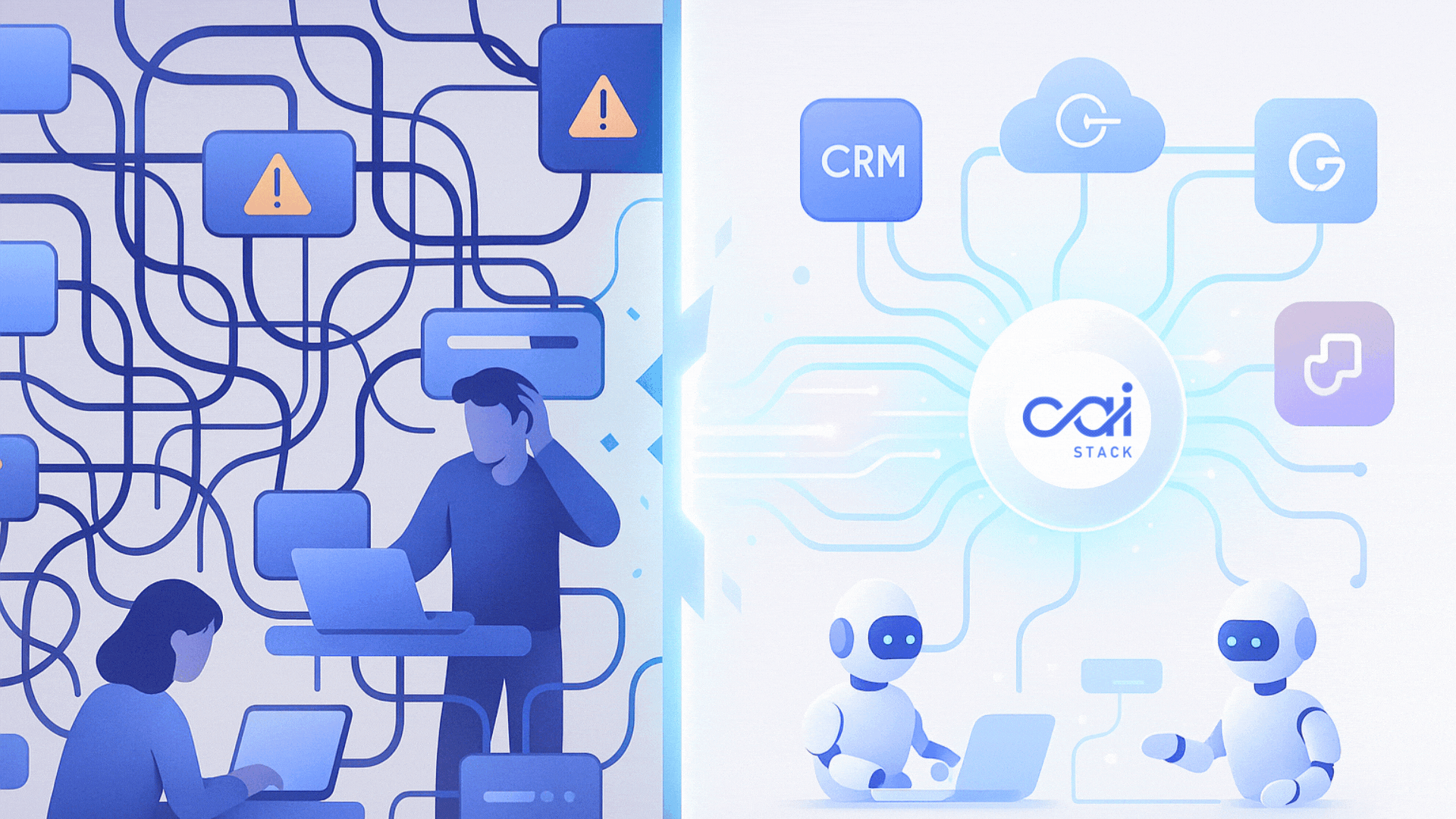
But these systems are completely isolated. They can't share data. They don't coordinate. And some poor team member is stuck manually copying information between them like it's 1995.
This is exactly the problem AI middleware was designed to solve.
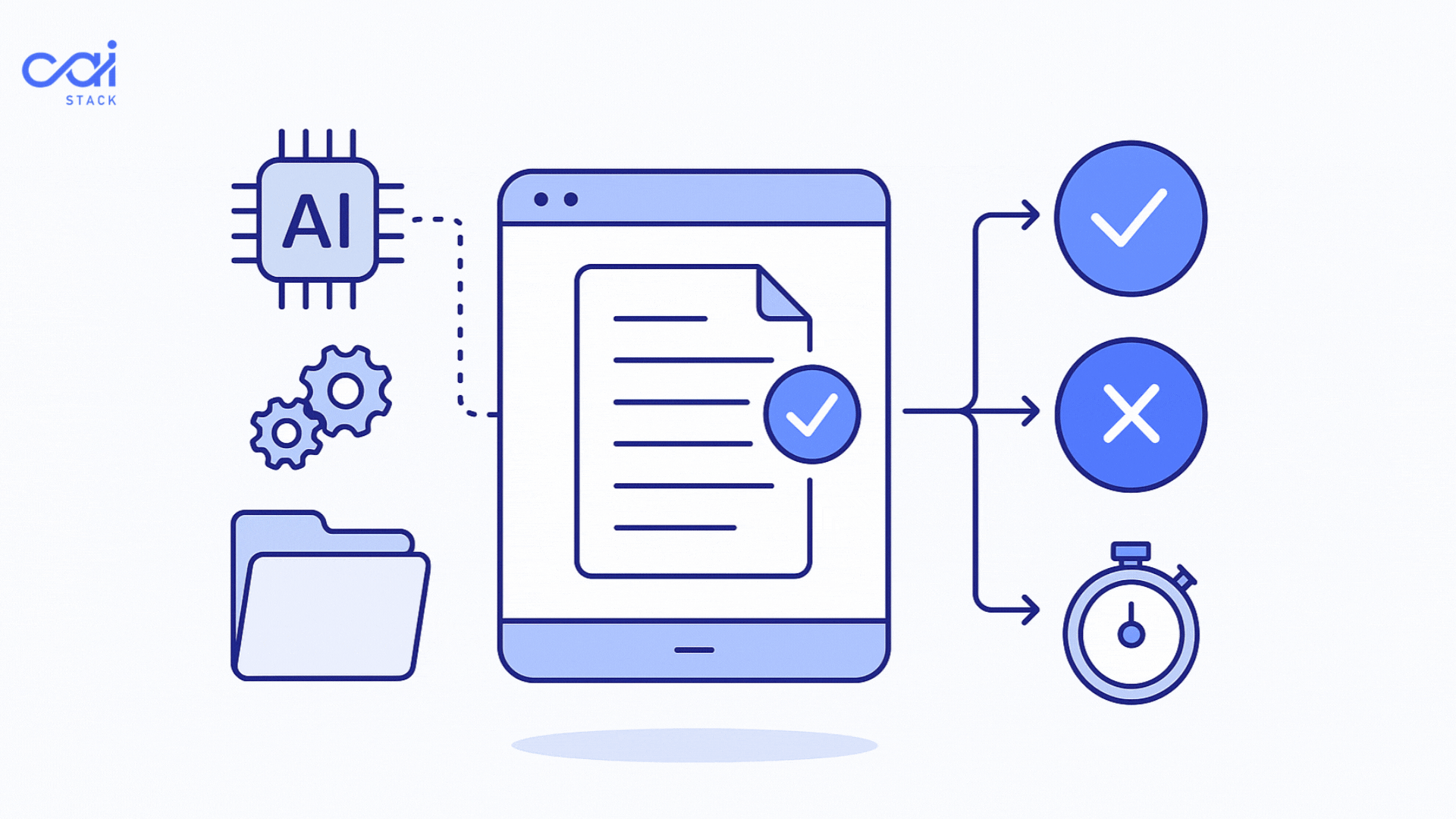
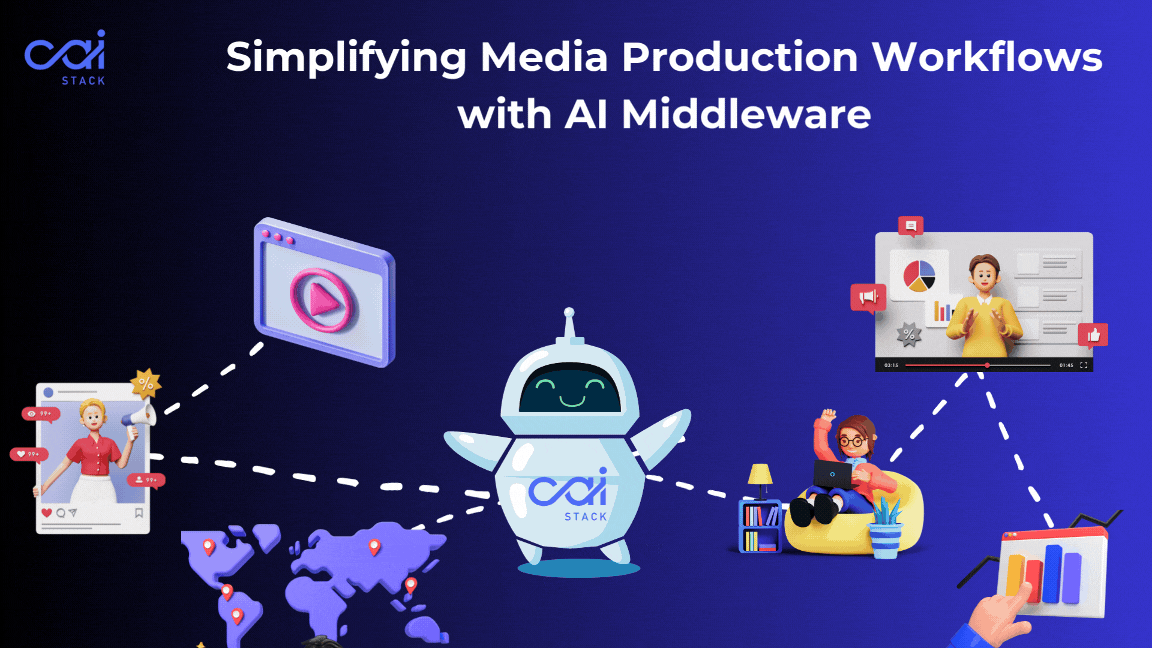
AI middleware works as the translator and traffic controller for all your AI systems.
It sits right in the middle of everything - between your legacy systems (your ERP, CRM, all those databases you've been running for years), your AI tools (machine learning platforms, natural language processing engines, computer vision systems), and your customer-facing apps (dashboards, mobile apps, websites).
Its job? Make sure all of these actually talk to each other and share data without your teams having to manually bridge every gap.
Without middleware, you're essentially building AI solutions that live in their own little worlds. With it, you've got an AI technology stack that actually functions like a unified system.
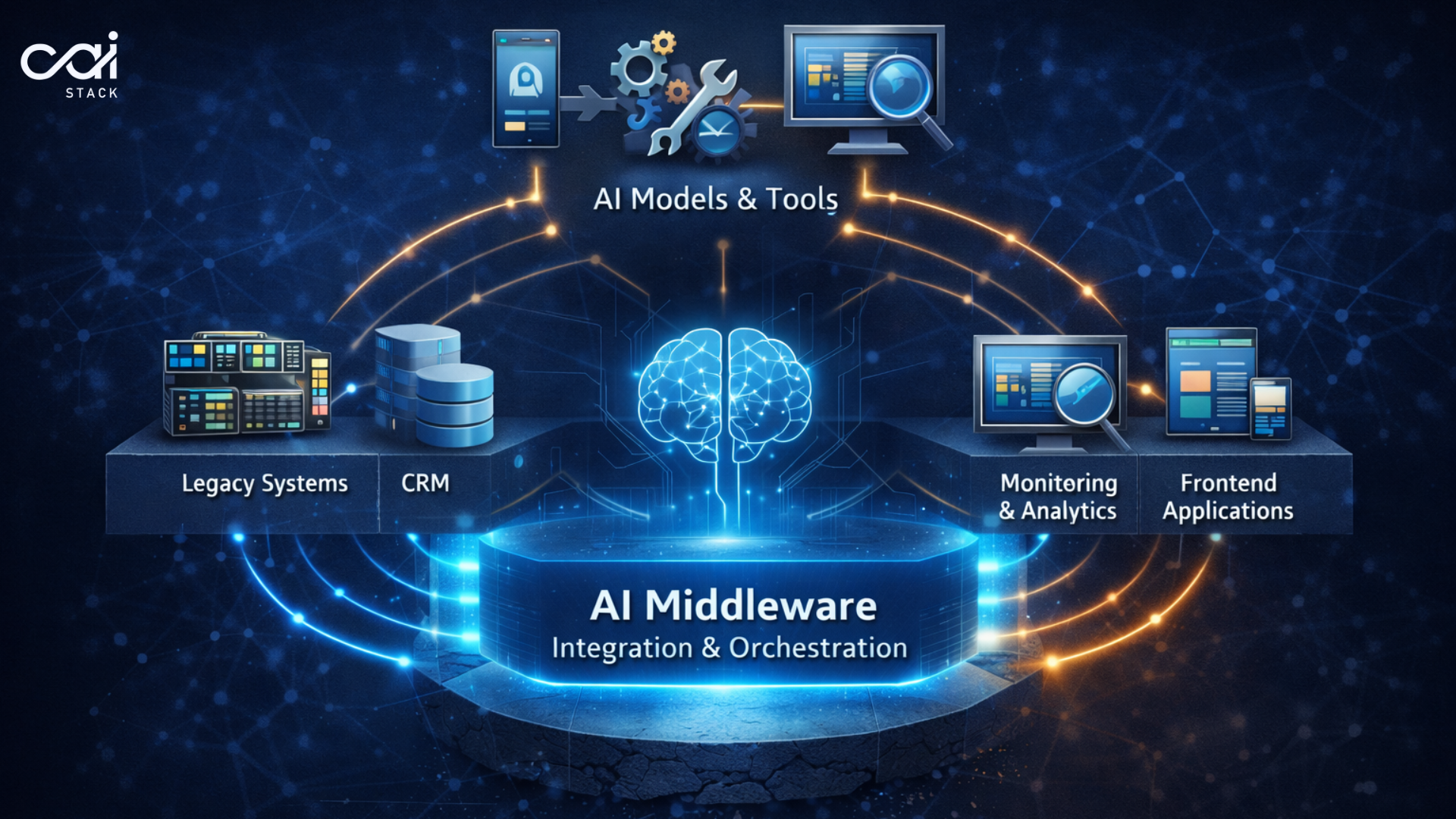
When you skip the middleware layer, several problems emerge:
Data becomes a nightmare. Your AI model needs data from three different systems. So someone has to export CSVs, clean them up, merge everything, and then feed it to the model. Every. Single. Time.
Insights arrive too late. By the time your AI analysis reaches the people who actually need it, the moment's already passed. The opportunity is gone.
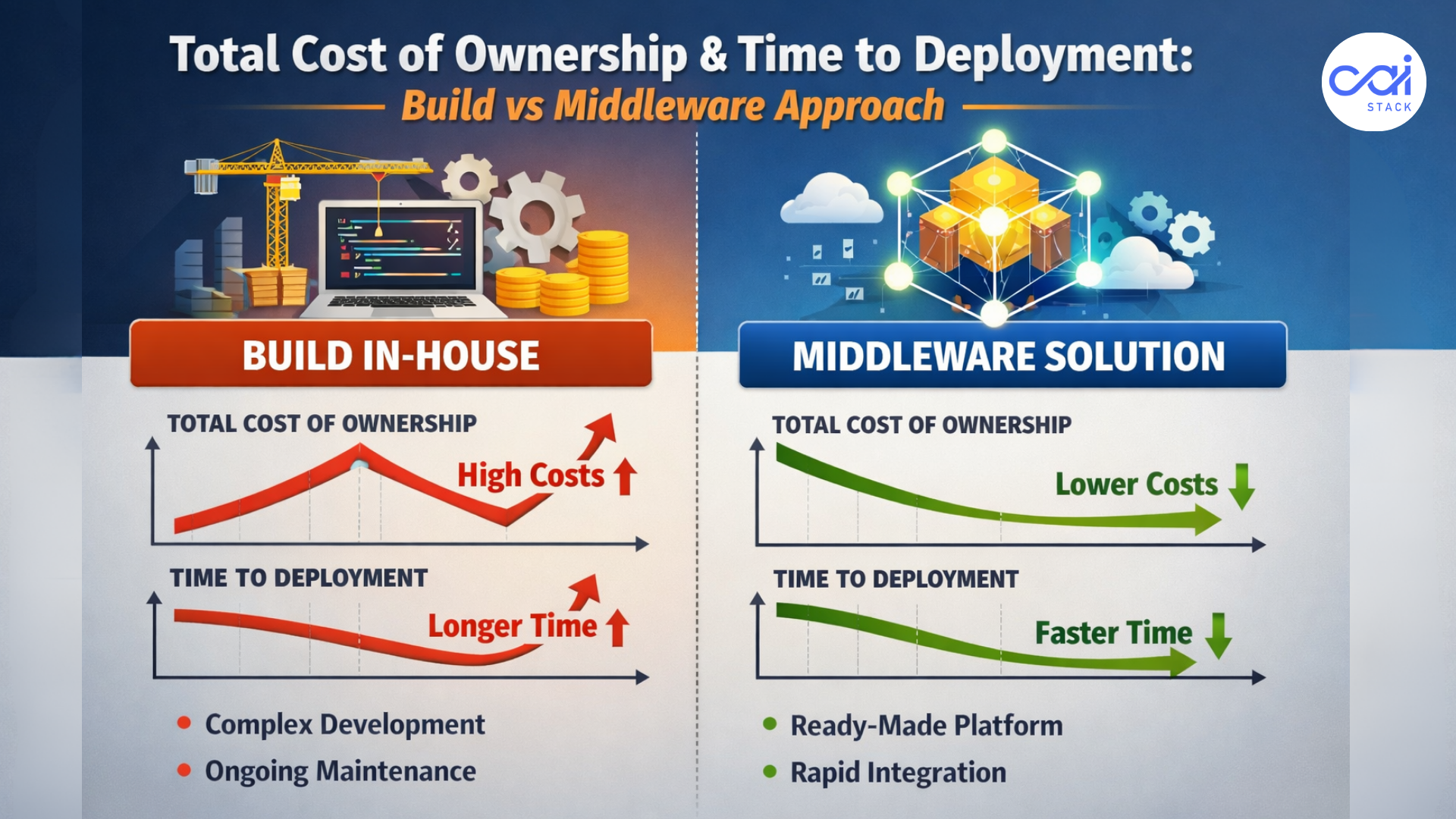
Integration becomes endless. Every new AI tool means months of custom integration work. Your IT team spends all their time connecting things instead of building anything valuable.
Real-world logistics AI use cases demonstrate that integrated data flows and coordinated systems are critical for delivering measurable benefits, whereas isolated AI implementations often fail to deliver expected outcomes.
They had all the right pieces. Just no AI middleware to tie them together.
Research from IBM backs this up - most enterprise AI infrastructure initiatives don't fail because of weak models. They fail because fragmented systems lack a unifying middleware layer to actually orchestrate data, workflows, and governance across all their tools.
Looking for a middleware solution that goes beyond basic workflow automation? Discover why CAI Stack's AI middleware outperforms traditional tools like N8N in enterprise environments.
Let's get practical about what's inside AI middleware and how each piece contributes to your enterprise AI architecture:
Building enterprise AI architecture isn't about buying the most expensive tools. It's about creating a foundation that lets everything actually work together.
Map out how information currently moves through your organization. Where does customer data live? How do orders flow from sales to fulfillment?
Don't jump straight to AI solutions. First, understand the connections you need to make.
Identify every system that needs to connect:
Your AI middleware needs to plug into all of these.
AI infrastructure is the complete environment that enables AI to deliver business value. It includes:
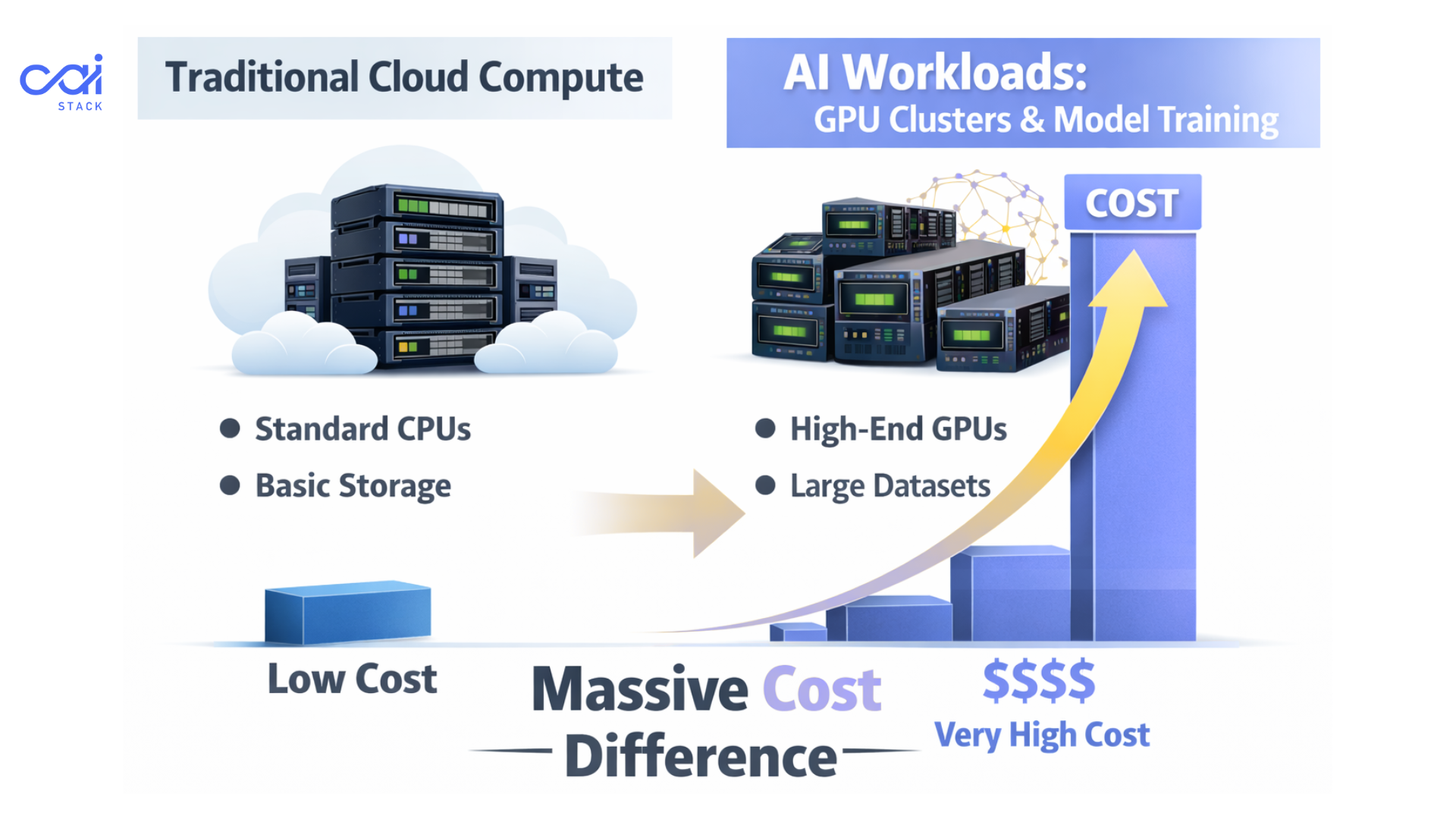
Most companies only focus on compute and storage. They buy powerful hardware and advanced AI models.
But they completely ignore the middleware layer. And that's exactly why their AI infrastructure never delivers the ROI they expected.
The middleware is what transforms isolated AI experiments into a functioning enterprise AI platform that actually drives real business outcomes.
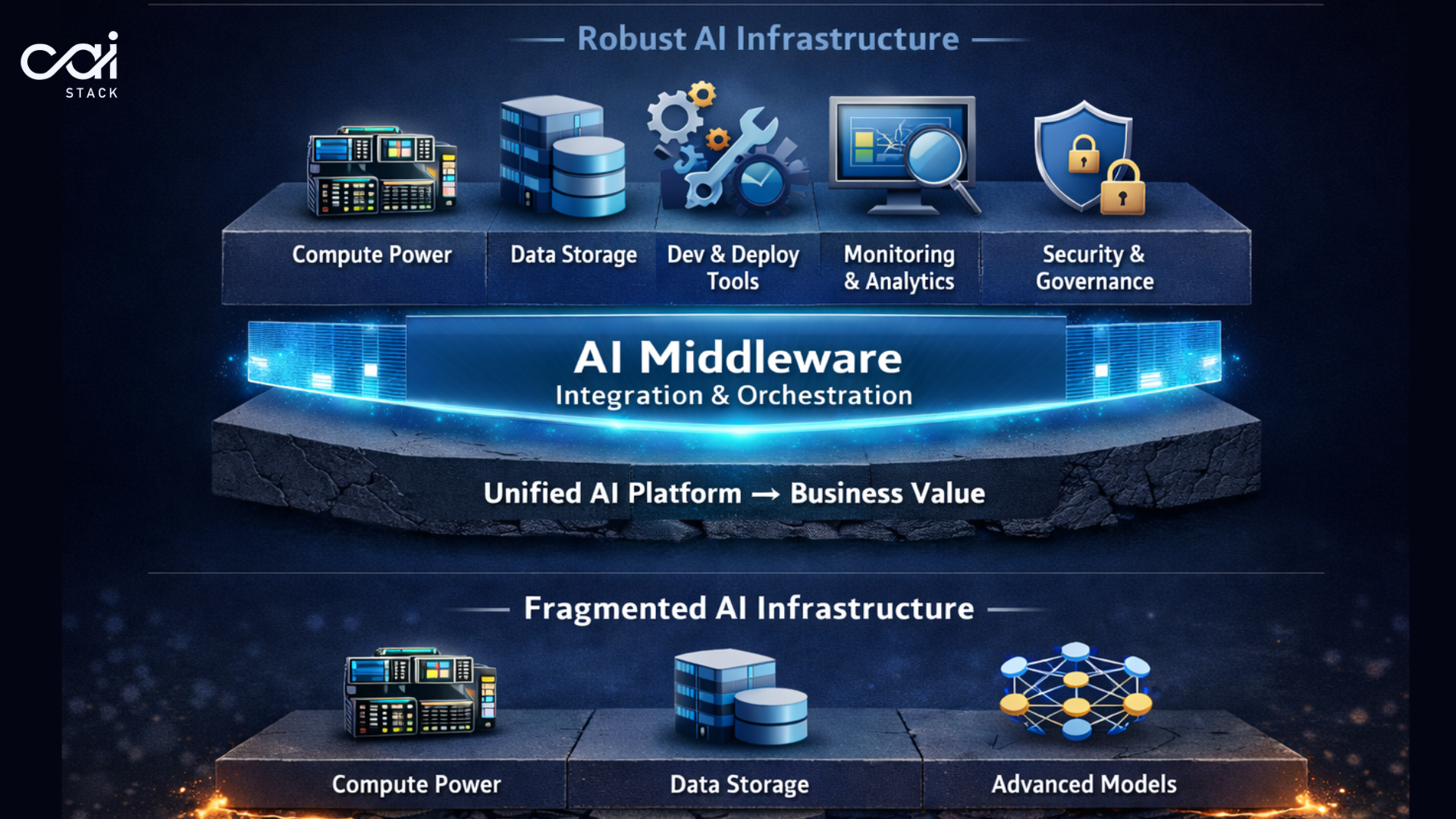
When you implement AI middleware as part of your enterprise AI architecture, several things change:
Recent research shows that AI-driven middleware significantly improves enterprise integration efficiency by automating data translation, orchestration, and cross-system communication - turning isolated AI tools into coordinated platforms.
What is AI middleware? It's the layer most companies skip and then wonder why their AI initiatives stall.
It's the difference between having expensive AI tools that don't talk to each other and having an enterprise AI platform that functions as a cohesive system.
Building AI infrastructure without proper middleware is like building a house without plumbing. Sure, you've got rooms and a roof. But nothing flows the way it should.
Your AI system architecture needs this foundation to succeed. Not because it's technically interesting, but because it's what makes AI practical and valuable for your business.
Ready to build an AI infrastructure that scales? CAI Stack provides the middleware foundation you need to connect your AI investments and turn them into competitive advantages. Schedule a conversation to see how it works in your environment.
Subscribe to get the latest updates and trends in AI, automation, and intelligent solutions — directly in your inbox.
Explore our latest blogs for insightful and latest AI trends, industry insights and expert opinions.
Empower your AI journey with our expert consultants, tailored strategies, and innovative solutions.